
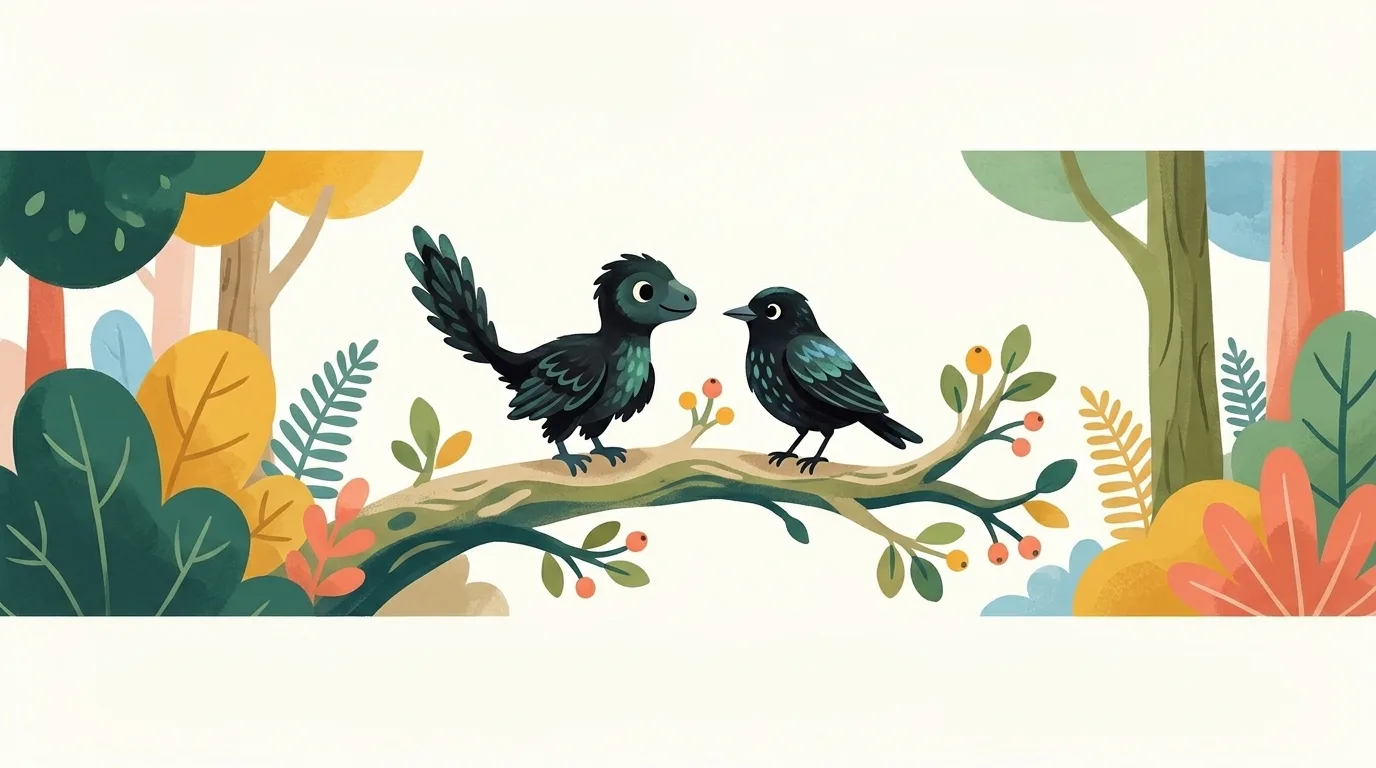
Illustration, made with AI
How do scientists know what color a dinosaur was?
By looking at tiny colour packets in fossil feathers!
Different colours come from packets of different shapes. Scientists match fossil shapes to the same shapes in living birds, which show what colour each makes.
Thin packets stacked in layers mean shiny black, like a starling!
Tell me more
The colour packets are called melanosomes, and they hold pigment. Each is less than a thousandth of a millimetre across, so scientists use a powerful microscope to see them. Microraptor's fossil feathers had thin, rod-shaped packets stacked in layers, just like a starling's, so it was glossy black with a shimmer. Another small dinosaur, Sinosauropteryx, was the first dinosaur that isn't a bird to be found with feathers. Its colour packets showed a dark back, a pale belly and a striped tail. Colours like that may have helped it blend in.
Words to know
- melanosomestiny packets inside feathers and skin that hold color
- pigmenttiny colored bits that give something its color
- microscopea tool that makes tiny things look big
Try it at home
Look closely at a dark bird like a pigeon or starling in the sunshine. See the shiny rainbow shimmer on its feathers? Some dinosaurs shimmered like that too.
 Dig deeper
 What else?
 Surprise me!