
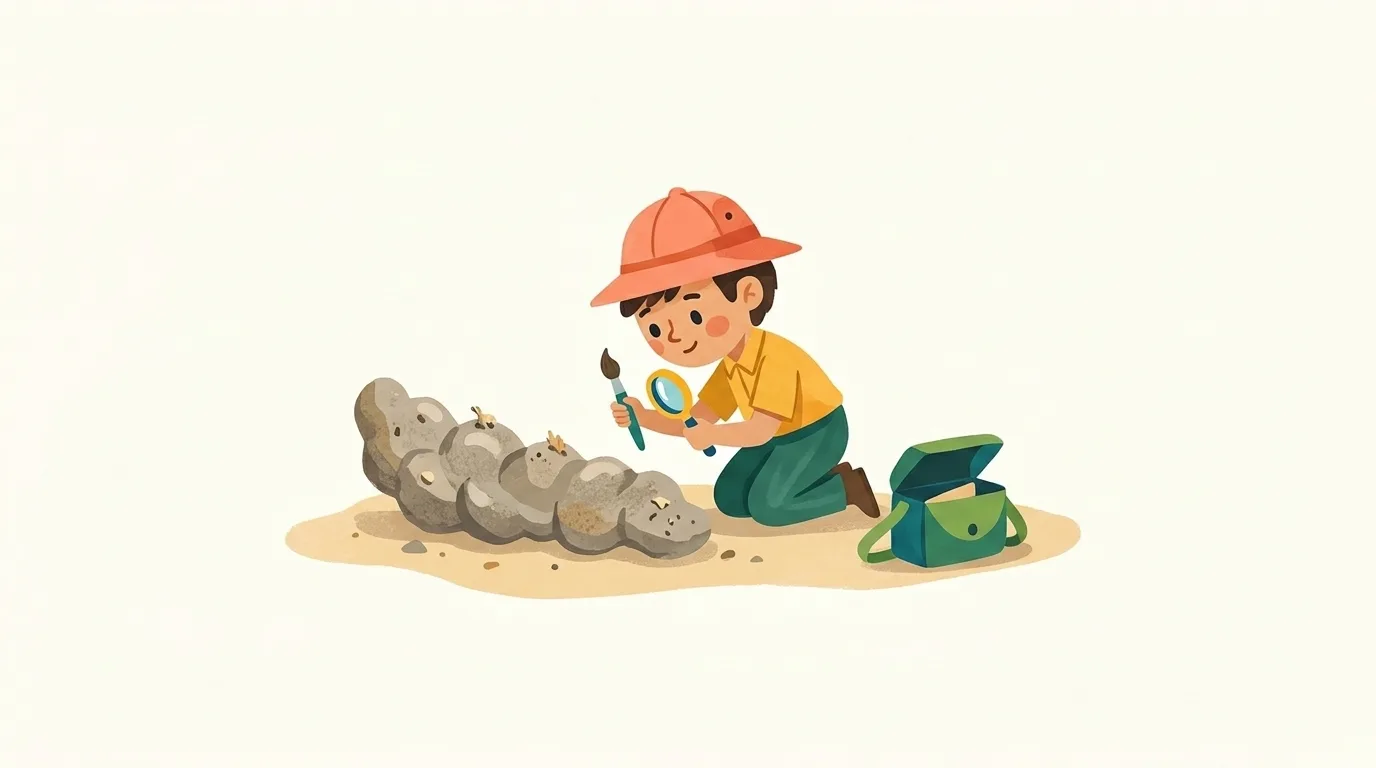
Illustration, made with AI
How big was the biggest dinosaur poop?
Huge! The biggest fossil poops ever found are over 60 centimetres long, longer than your arm.
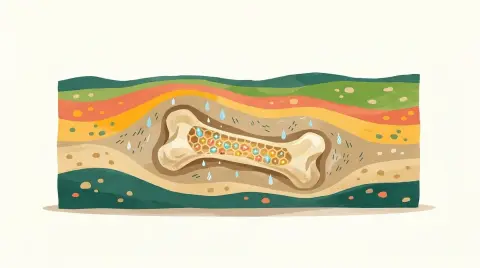
Over a very long time, minerals replaced the poop and turned it to stone. Now it's hard as rock and doesn't smell.
Inside are clues to what animals ate!
Tell me more
Fossil poop is called a coprolite, from old Greek words for "dung" and "stone". In 1824, fossil hunter Mary Anning noticed odd stones in the bellies of fossil sea reptiles. When broken open, they held fish bones and scales. In 1829, a scientist named William Buckland worked out they were fossil poop. Before that, people called them "fossil fir cones". Bits of bone have been found in coprolites that scientists think came from tyrannosaurs. Today, scientists can look inside without breaking them, using a scanner like a hospital scanner, only much more powerful. One crocodile even stepped in poop before it fossilised!
Words to know
- coprolitepoop that turned into a stone fossil long, long ago
- mineralsthe natural bits that rocks are made of
 Dig deeper
 What else?
 Surprise me!