
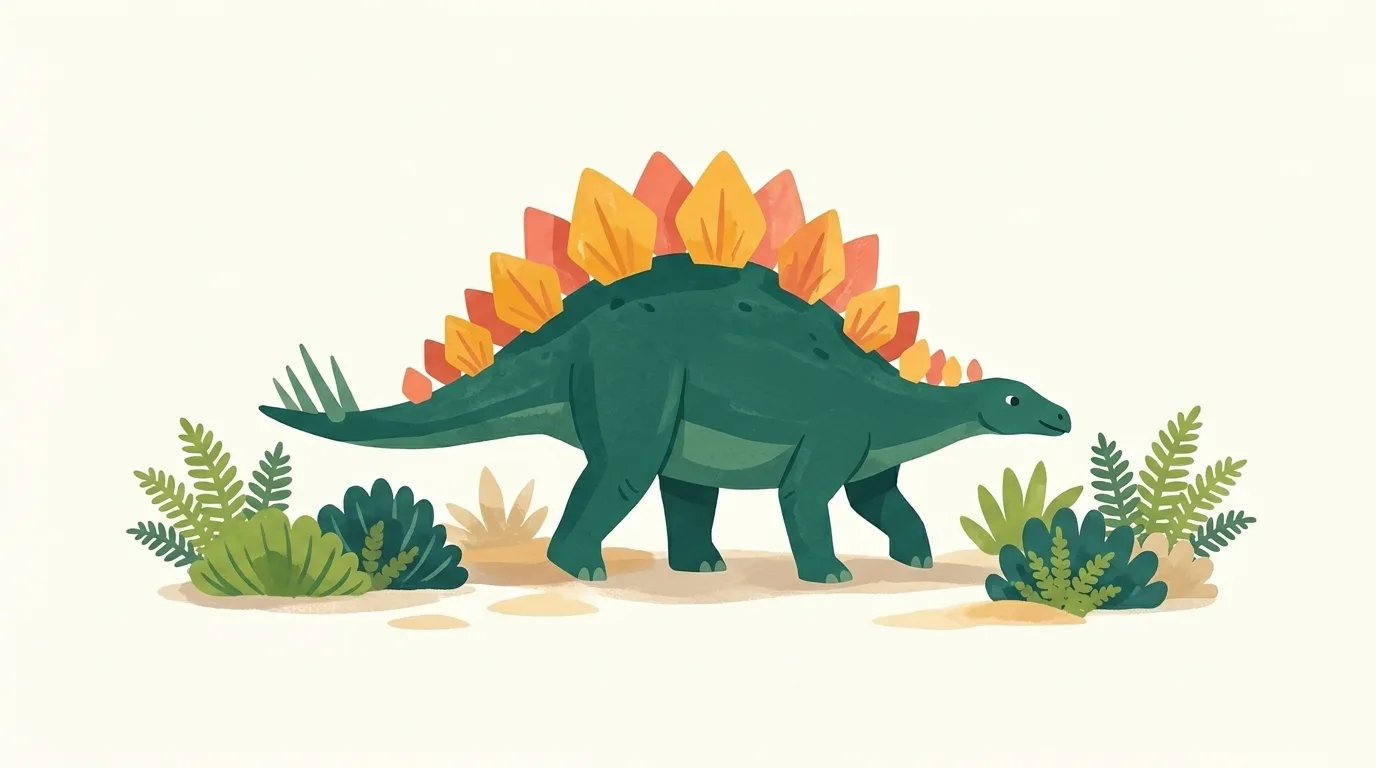
Illustration, made with AI
Why did Stegosaurus have plates on its back?
Scientists aren't sure!
The bony plates may have warned off enemies or helped Stegosaurus spot its own kind. Blood flowing through grooves in the plates may have let out heat or soaked it up.
The biggest plates stood about as high as a door handle!
Tell me more
The plates grew in its skin. They were not joined to its skeleton, which is why fossil plates are usually found apart from the bones. The scientist who first described Stegosaurus thought the plates lay flat on its back. Then a skeleton was found still held in mud, with its plates standing up. They stood in two rows, taking turns on either side of the backbone. The plates were probably not for fighting. Stegosaurus kept enemies like Allosaurus away with the sharp spikes on its tail. Stegosaurus lived about 152 to 145 million years ago, long before T. rex.
Words to know
- skeletonall the bones in a body together, its frame
 Dig deeper
 What else?

 Surprise me!