
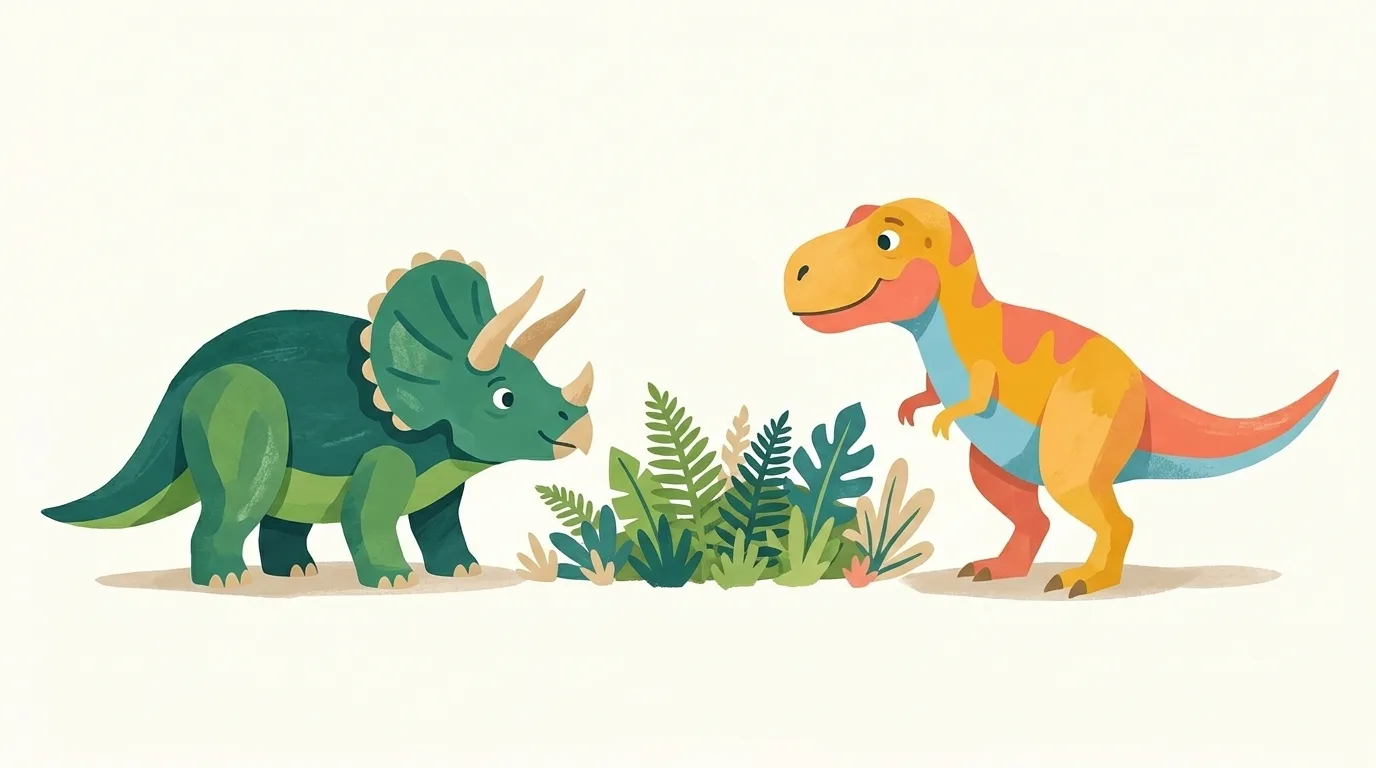
Illustration, made with AI
Did Triceratops ever fight T. rex?
Yes, we think so!
A Triceratops horn has T. rex tooth marks. The horn broke, then new bone grew over the break, so that Triceratops survived the meeting and healed.
Like a scraped knee that heals but leaves a mark.
Tell me more
Triceratops and Tyrannosaurus rex lived in the same places at the same time, about 68 to 66 million years ago, in what is now the USA. So they could easily have met. Triceratops's frill might have helped protect its neck, but some frills have T. rex bite marks right through them. Unlike many horned dinosaurs, which lived in herds, Triceratops fossils are usually found on their own. That suggests Triceratops may have spent much of its life alone, with only its horns and frill for protection. Its horns were covered in keratin, the stuff in your fingernails, making them longer and sharper in life.
Words to know
- frilla big, flat collar of bone at the back of the head
- Tyrannosaurus rexthe huge meat-eating dinosaur we call T. rex
Try it at home
Find a stick or broom about as long as your leg and a bit more, and hold it up by your forehead. That's about how long a Triceratops brow horn was!
 Dig deeper
 What else?

 Surprise me!