
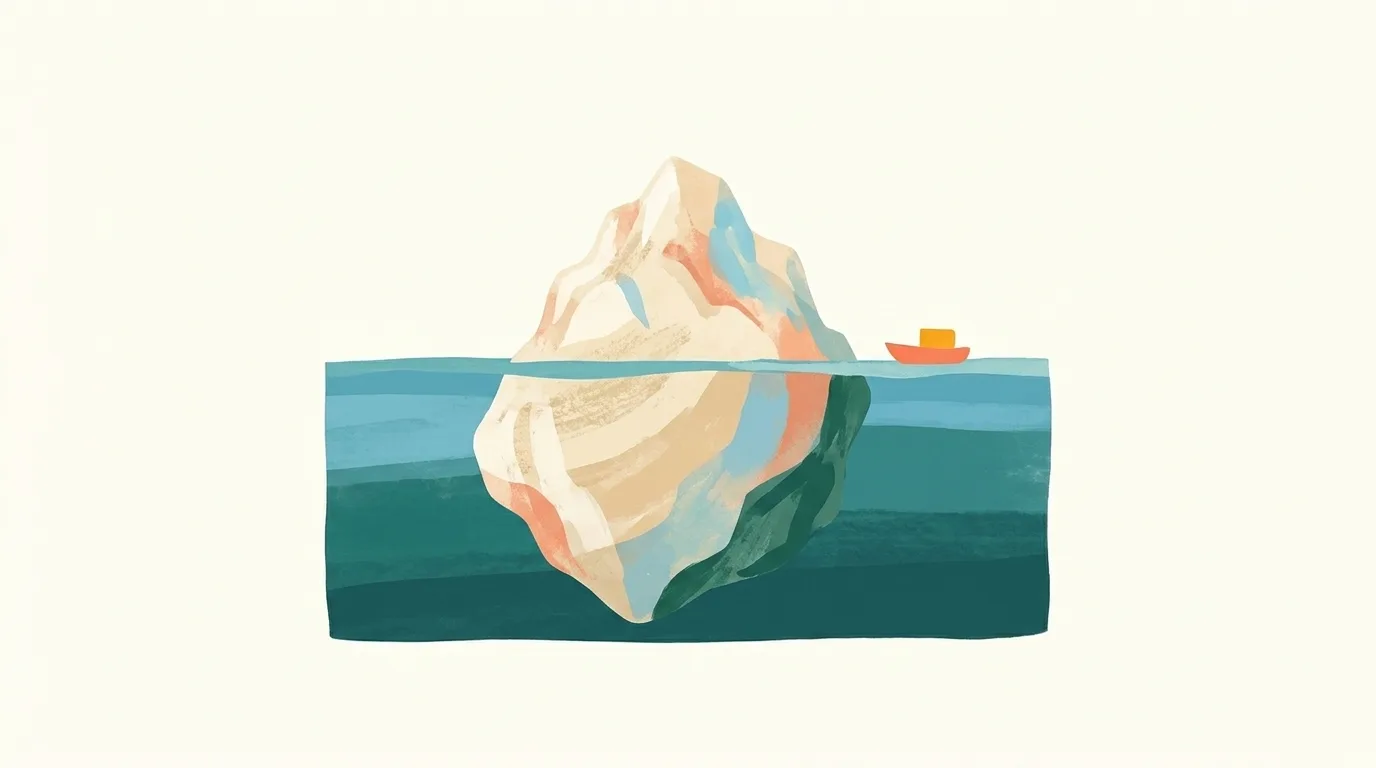
Illustration, made with AI
Why do giant icebergs float?
Because ice is a bit lighter than seawater, but only a bit! So only about one-tenth of an iceberg pokes above the sea.
The rest hides underwater: a giant chunk that broke off a glacier.
Like a mountain under a blanket!
Tell me more
Ice is less dense than seawater, but not by much, so most of an iceberg stays underwater. Icebergs are huge chunks that break off glaciers or ice shelves and float away. That breaking off is called calving. Even though icebergs float in the salty sea, they are made of fresh water. They are frozen glacier ice, not frozen seawater. To count as an iceberg, a chunk must be more than 15 metres long. Smaller floating pieces have fun names: growlers and bergy bits. As an iceberg melts, tiny bubbles of air trapped in the ice burst out with a popping, fizzing sound. Some people call it Bergie Seltzer.
Words to know
- densepacked tightly, so it is heavy for its size
- calvingwhen a chunk of ice breaks off a glacier
Try it at home
Put an ice cube in a clear glass of water. Look from the side: how much is above the water and how much is under? A giant iceberg floats just the same way.

 Dig deeper

 What else?


 Surprise me!