
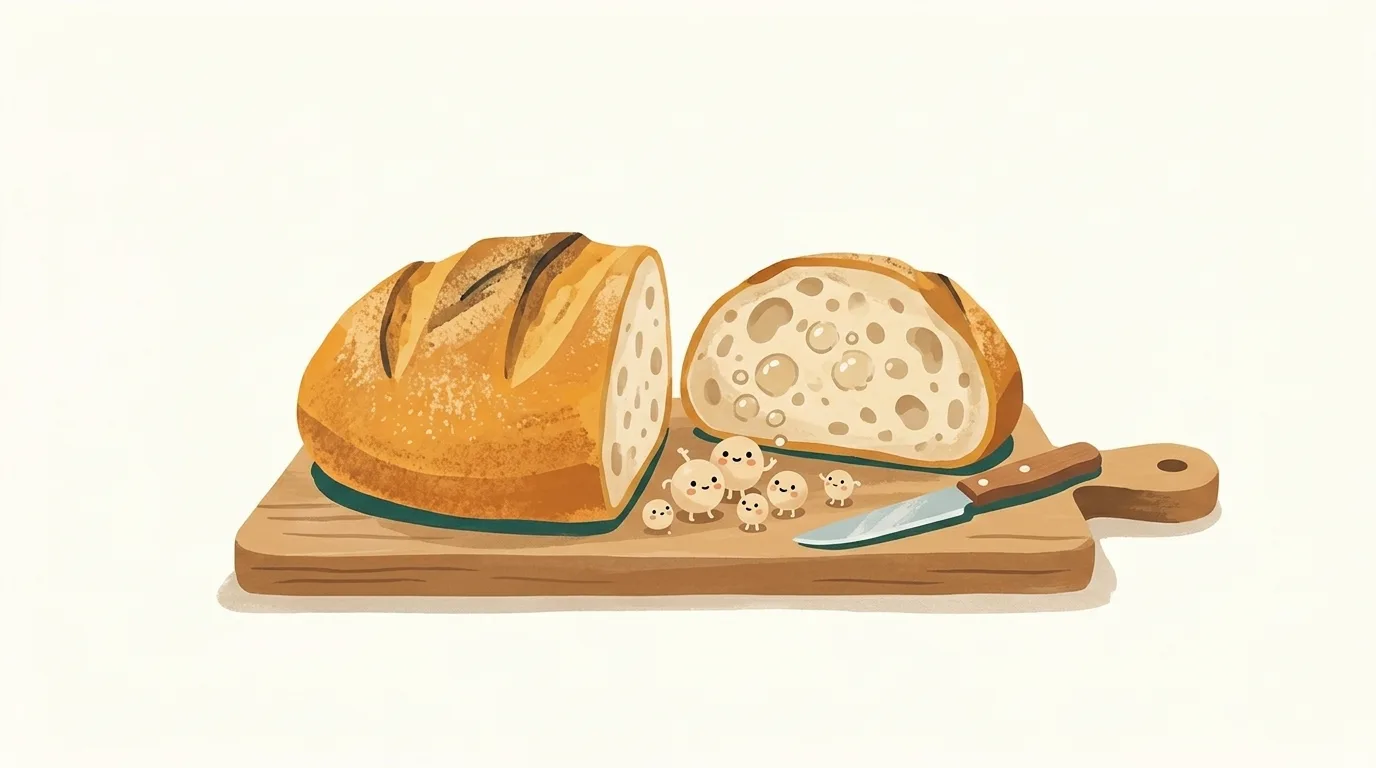
Illustration, made with AI
Why does bread have tiny holes inside?
Because of bubbles! Tiny living yeast makes gas inside the dough.
Yeast eats sugar and gives off carbon dioxide. Stretchy gluten traps the gas, so bubbles grow all through the dough.
In the oven, the bread sets firm, like a sponge full of holes.
Tell me more
In the hot oven, something even bigger happens. Heat turns water inside the bubbles into steam, and the steam puffs them up. Steam is the main reason bread rises in the oven, because the gas from yeast alone is too little. The heat also stops the yeast early on. The soft inside of a loaf is called the crumb: lots of bubbles with stretchy walls. As bread goes stale, the crumb gets firmer. Sourdough bread uses wild yeast living in a mix of flour and water, which bakers can keep going for years.
Words to know
- yeasta tiny living thing that eats sugar and makes gas
- glutenstretchy strands in wheat dough that trap bubbles
- crumbthe soft, holey inside of a loaf
Try it at home with a grown-up
With a grown-up, stir a spoon of yeast and a pinch of sugar into a cup of warm water. Wait ten minutes and watch it foam!
 Dig deeper

 What else?


 Surprise me!