
Illustration, made with AI
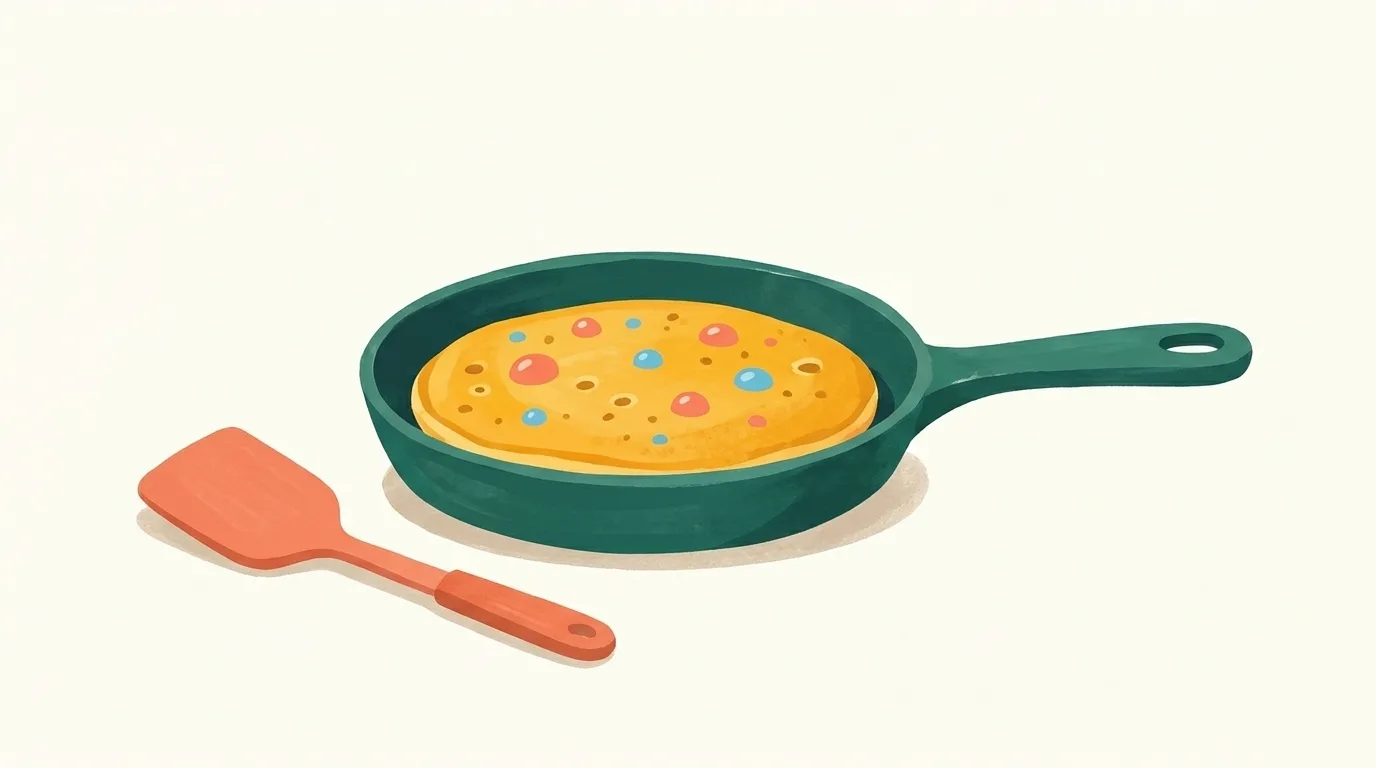
Why do pancakes get bubbles when they cook?
Baking powder makes the bubbles!
When the batter gets wet and then hot, baking powder gives off a gas called carbon dioxide. The gas puffs up tiny bubbles in the batter.
The bubbles make the pancake thick and fluffy.
Tell me more
Baking powder is a mix of a carbonate and a weak acid. A little cornstarch keeps them from reacting too soon. Once the batter is wet, they start to react and make gas. Many modern powders are double-acting. They release some gas when wet, and more when heated. Batter can only trap the gas for a few minutes, so cooks use it quickly. The first baking powder sold in shops was launched in England in 1842. Not every pancake uses it. Thin English pancakes have no baking powder, so they stay flat, with a few bubbles that leave dark spots. Always ask a grown-up to use the stove.
Words to know
- baking powdera powder that makes gas bubbles in cake batter
- carbon dioxidean invisible gas we breathe out, also the bubbles in fizzy drinks
Try it at home with a grown-up
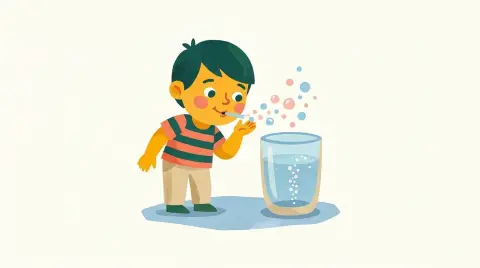
Ask a grown-up to stir a spoonful of baking powder into a cup of water. Watch the tiny bubbles form.
 Dig deeper
 What else?
 Surprise me!