
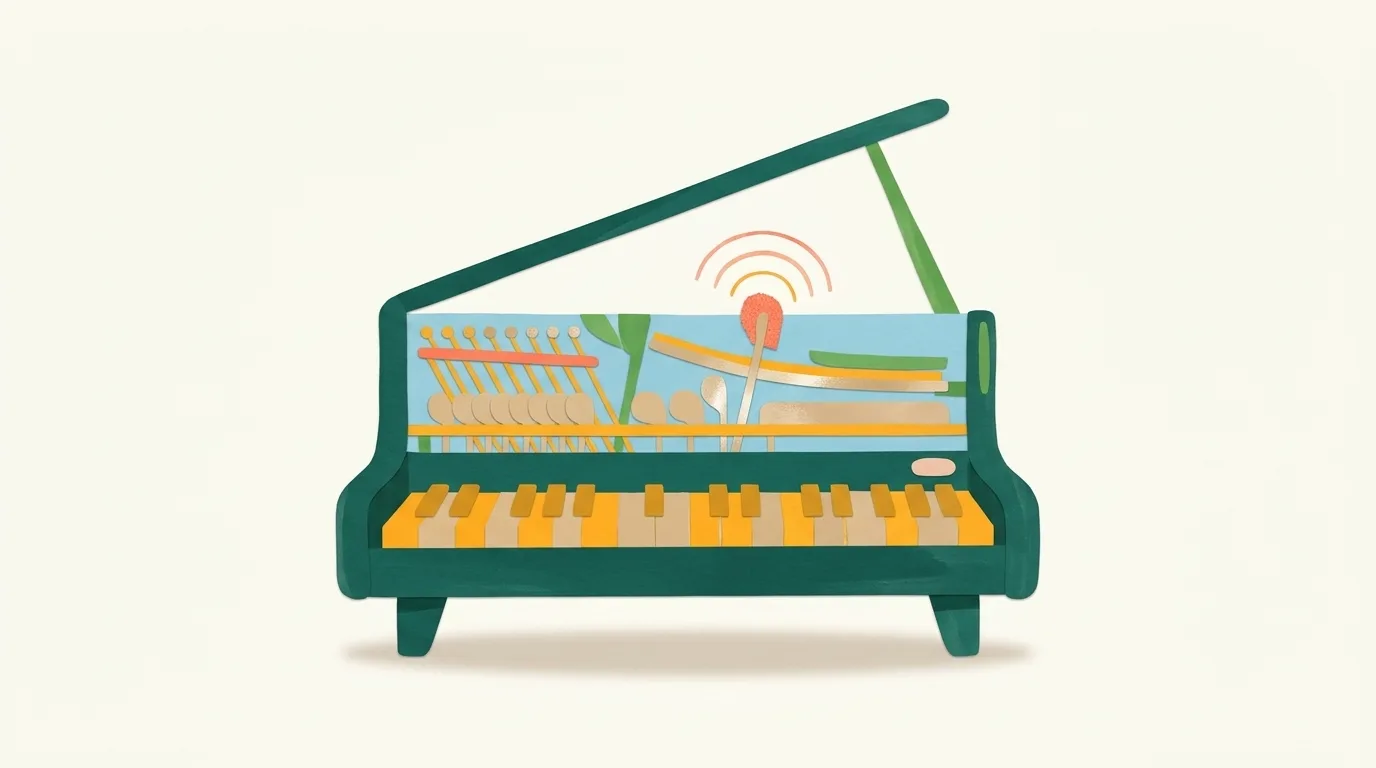
Illustration, made with AI
What happens inside a piano when I press a key?
A little hammer taps a string, and the string shakes.
When you press a key, a felt-covered hammer strikes the strings inside. The vibrations pass through a bridge to a soundboard, which makes the sound louder. Let go, and a damper stops the string.
Tell me more
A modern piano has 88 keys. Most notes have three strings, but the lowest notes have one or two. Bartolomeo Cristofori, in Italy, is credited with inventing the piano around 1700. Its name comes from Italian words meaning soft and loud. Unlike a harpsichord or pipe organ, a piano plays louder when you press harder, because the hammer hits the strings with more force. Pedals at the bottom lift all the dampers off the strings, so notes keep ringing after your fingers let go. Gottfried Silbermann made the forerunner of the modern pedal, and he showed an early piano to Bach in the 1730s.
Words to know
- vibrationsfast little shakes back and forth
- soundboarda big thin board inside a piano that makes its sound louder
Try it at home
Next time you can reach a piano, press one key softly, then press it firmly. Which one is louder?
 Dig deeper
 What else?

 Surprise me!