
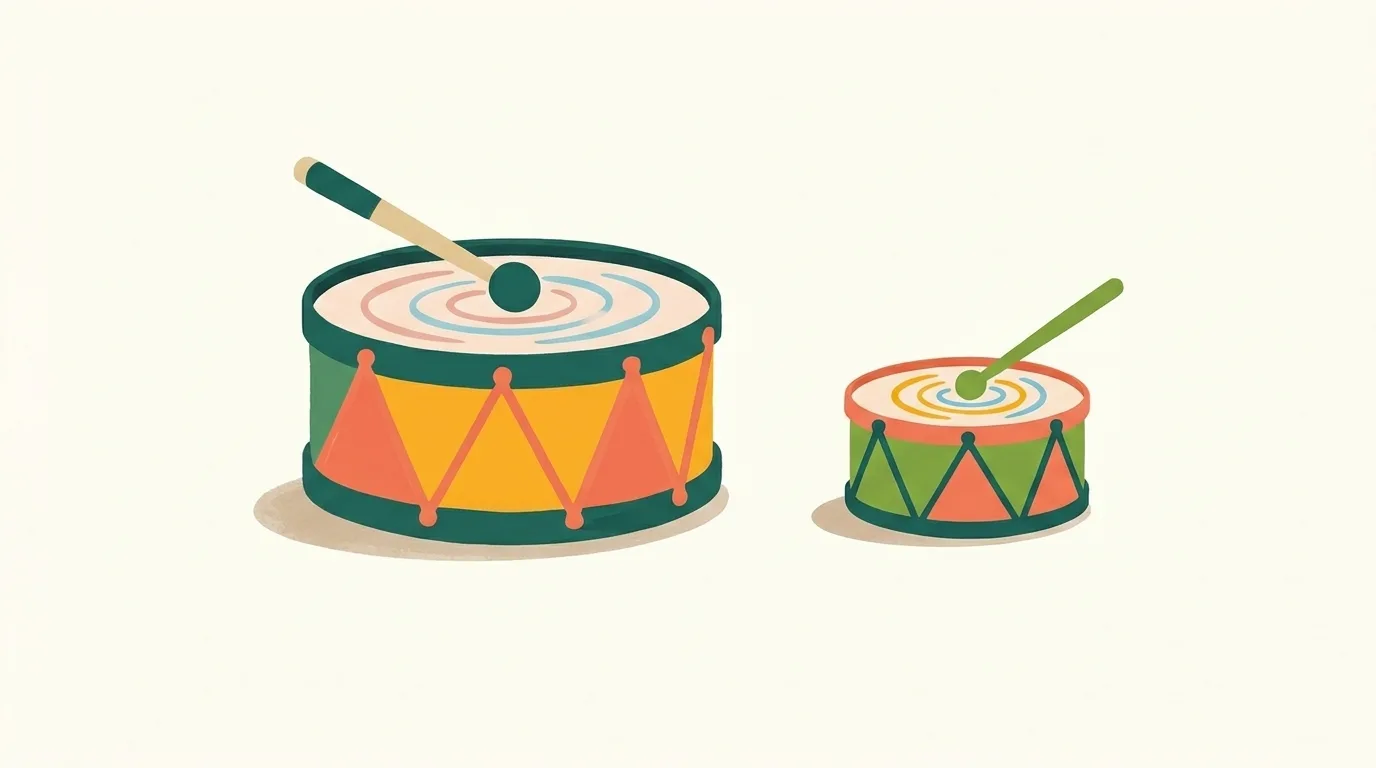
Illustration, made with AI
Why does a drum go boom when I hit it?
The skin shakes, and the shaking makes sound.
A drum has a skin stretched over a hollow shell. Hit it, and the skin vibrates. The shell helps make the sound louder. A tighter skin gives a higher sound.
The boom is a bouncing skin.
Tell me more
Drums are called membranophones, because they have at least one membrane, the drumhead, stretched over a shell. On a modern drum, tension rods around the rim let you tighten or loosen the head. When the tension goes up, the pitch gets higher and the sound gets quieter. Many things change a drum's sound, including the shell's size, thickness and material, and where and how hard you hit. Some drums, like timpani, can be tuned to exact notes with a foot pedal. Many cultures use drum rhythms the way they use spoken language or prayer.
Words to know
- membranea thin, soft layer, like a skin, that wraps something
- tensiona stretching pull, like a tight rubber band
- pitchhow high or low a sound is
Try it at home
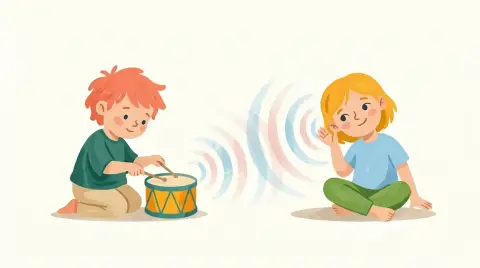
Tap a big upside-down bowl and a small upside-down cup with your hands. Which one sounds lower?
 Dig deeper

 What else?



 Surprise me!