
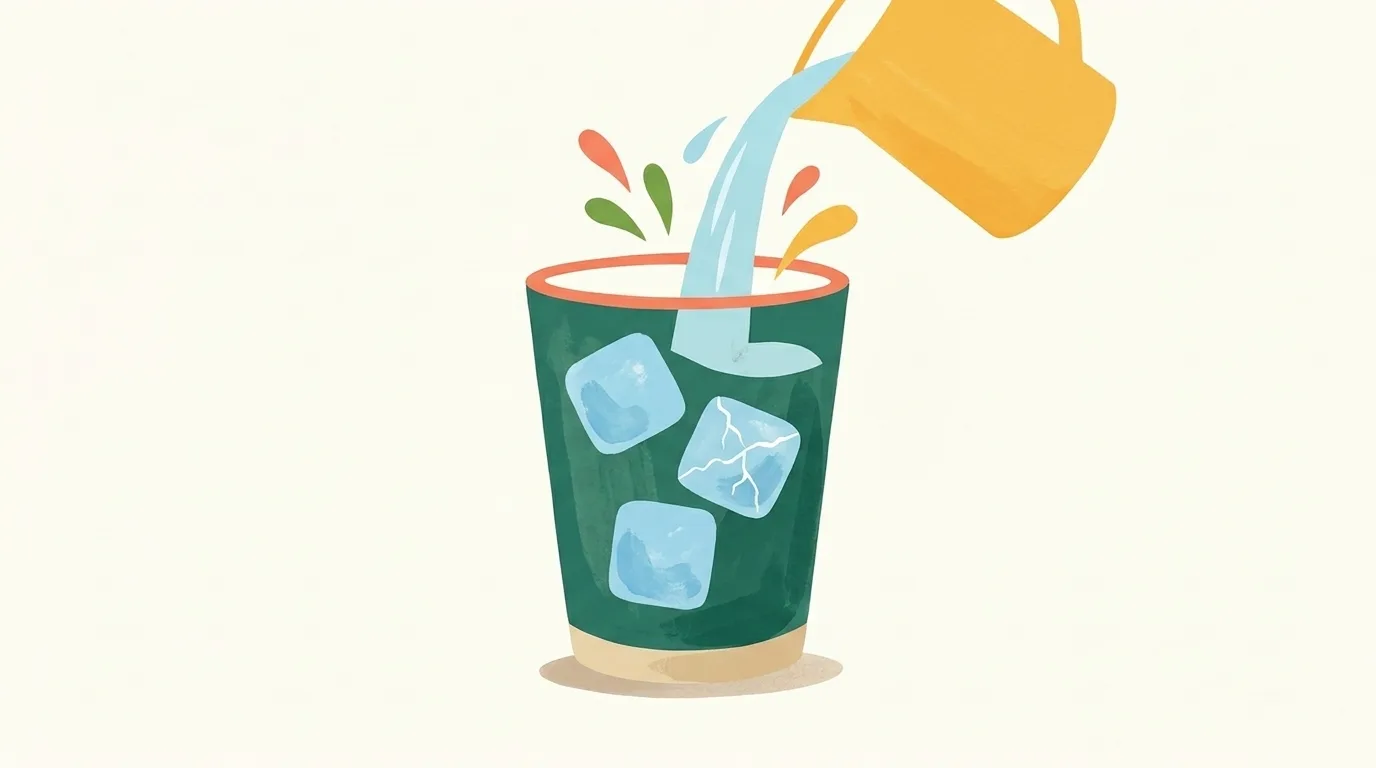
Illustration, made with AI
Why does ice crackle when you pour water on it?
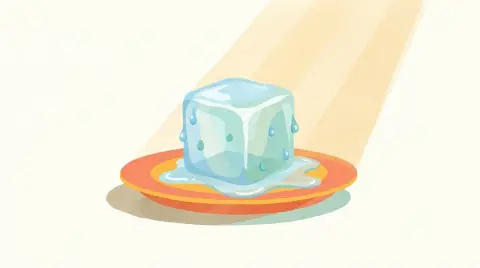
The ice cracks because its outside warms faster than its inside!
When warmer water hits cold ice, the outer layer warms first. The cold middle can't keep up, so strain builds until the ice cracks.
Each crackle is a tiny crack zipping through.
Tell me more
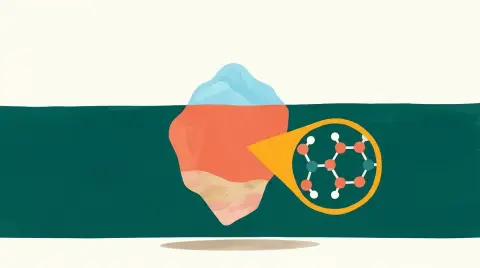
Ice is good at slowing heat down, so the outside of a cube ends up warmer than the inside. When different parts of something change size by different amounts, the strain can crack it. Scientists call this thermal shock. The same thing can happen when boiling water is poured into a cold glass and the glass cracks. You can hear the ice so well because it floats! Ice is less dense than water, so it bobs at the top of your drink. Melting also takes a lot of heat, so the cube changes slowly, and the cracking can go on for many seconds or even minutes.
Words to know
- densepacked tightly, so it is heavy for its size
Try it at home
Drop an ice cube into a glass of room-temperature water and hold your ear close. Listen for the crackles and look for new cracks!
 Dig deeper
 What else?
 Surprise me!