
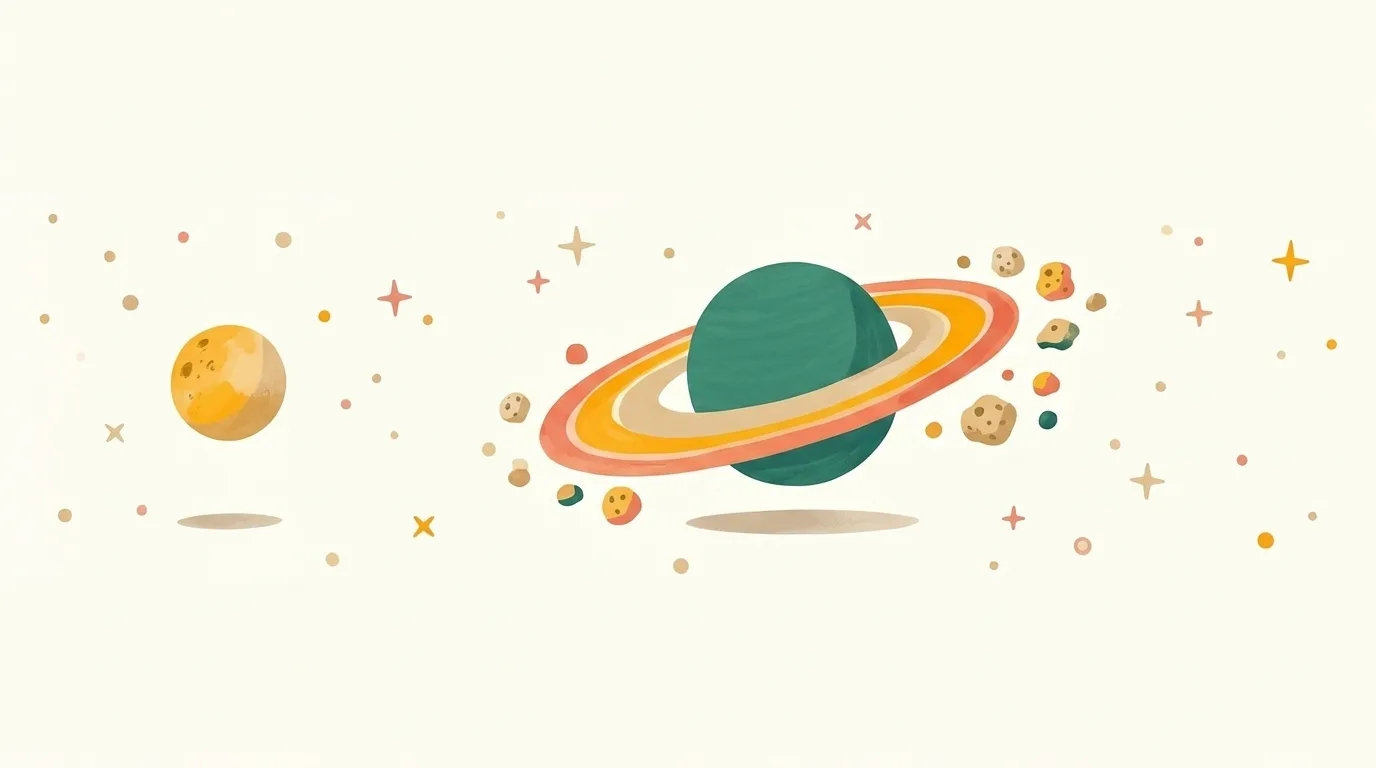
Illustration, made with AI
Why do some planets have lots of moons?
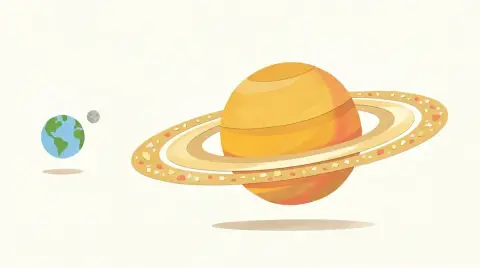
Big planets have a bigger zone of pull, so they catch and keep more moons.
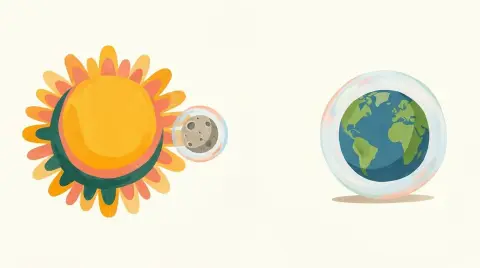
Each planet’s gravity rules a space called its Hill sphere. Giant planets have huge ones, so passing rocks get captured.
By August 2026, Saturn had 293 moons. Mercury has none!
Tell me more
Being far from the Sun helps too, so the giant outer planets have the biggest zones of all. Not every moon was caught, though. Jupiter’s and Saturn’s inner moons probably formed along with their planets, out of the swirling disk of gas around the young Sun. Earth’s Moon is different again. Scientists think a Mars-sized object bumped into the young Earth and knocked off a chunk that became the Moon. Mars has two small moons, Phobos and Deimos, and scientists still debate whether they were captured asteroids or formed with Mars.
Words to know
- gravitythe invisible pull that draws things toward each other
- Hill spherethe space where a planet's pull beats the Sun's

 Dig deeper
 What else?
 Surprise me!