
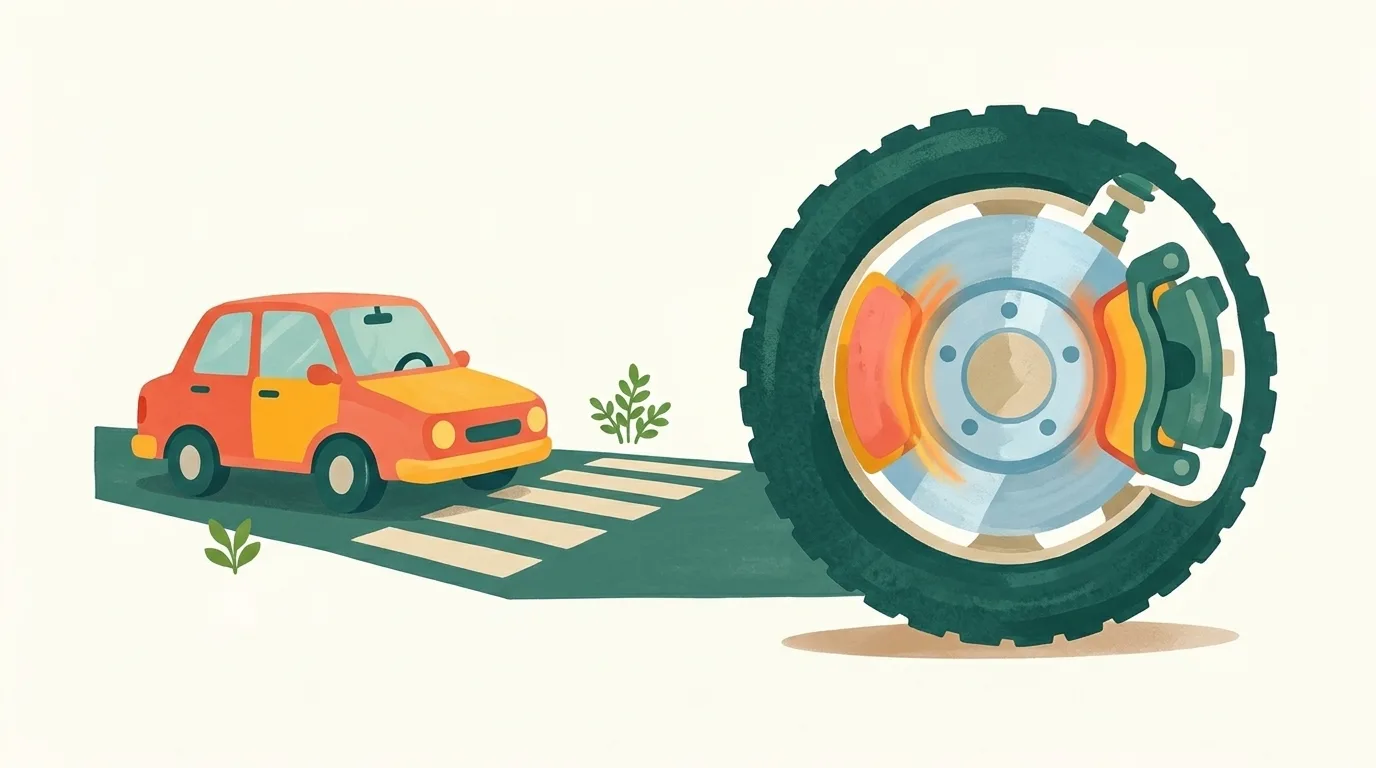
Illustration, made with AI
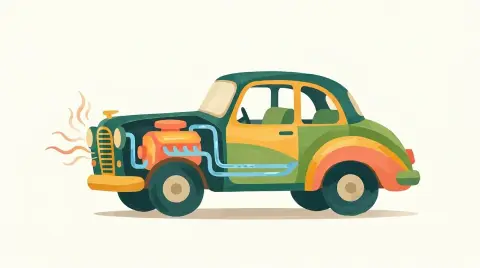
How do brakes stop a fast car?
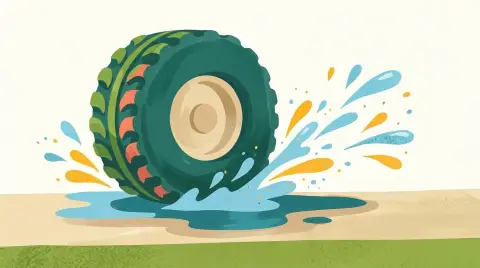
With friction! Brake pads squeeze a spinning disc on each wheel.
The pads rub hard against the disc, slowing the wheel. The car's energy of movement turns into heat, so the brakes get very hot.
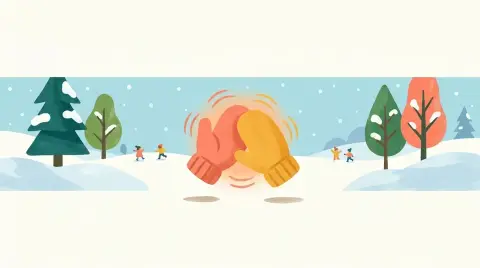
Rub your hands together fast: feel them warm up?
Tell me more
When the driver presses the brake pedal, liquid in thin tubes pushes on clamps called calipers. The calipers press the brake pads against both sides of the disc. The heat has to escape into the air, so many discs have air channels inside to cool them faster. If brakes get too hot, they stop working so well. Disc brakes first proved themselves in a famous 24-hour race in 1953. The race needed hard braking from high speed several times each lap, and the winning Jaguars had disc brakes, while their rivals did not. Today, most cars use disc brakes like these.
Words to know
- frictionthe rubbing force that slows or stops things sliding
- brake padsblocks that squeeze the wheel's disc to slow it down
- calipersclamps that press the brake pads onto the disc
Try it at home
Rub your hands together fast for ten seconds. Feel the warmth? That's friction turning movement into warmth, just like brakes do.
 Dig deeper
 What else?
 Surprise me!