
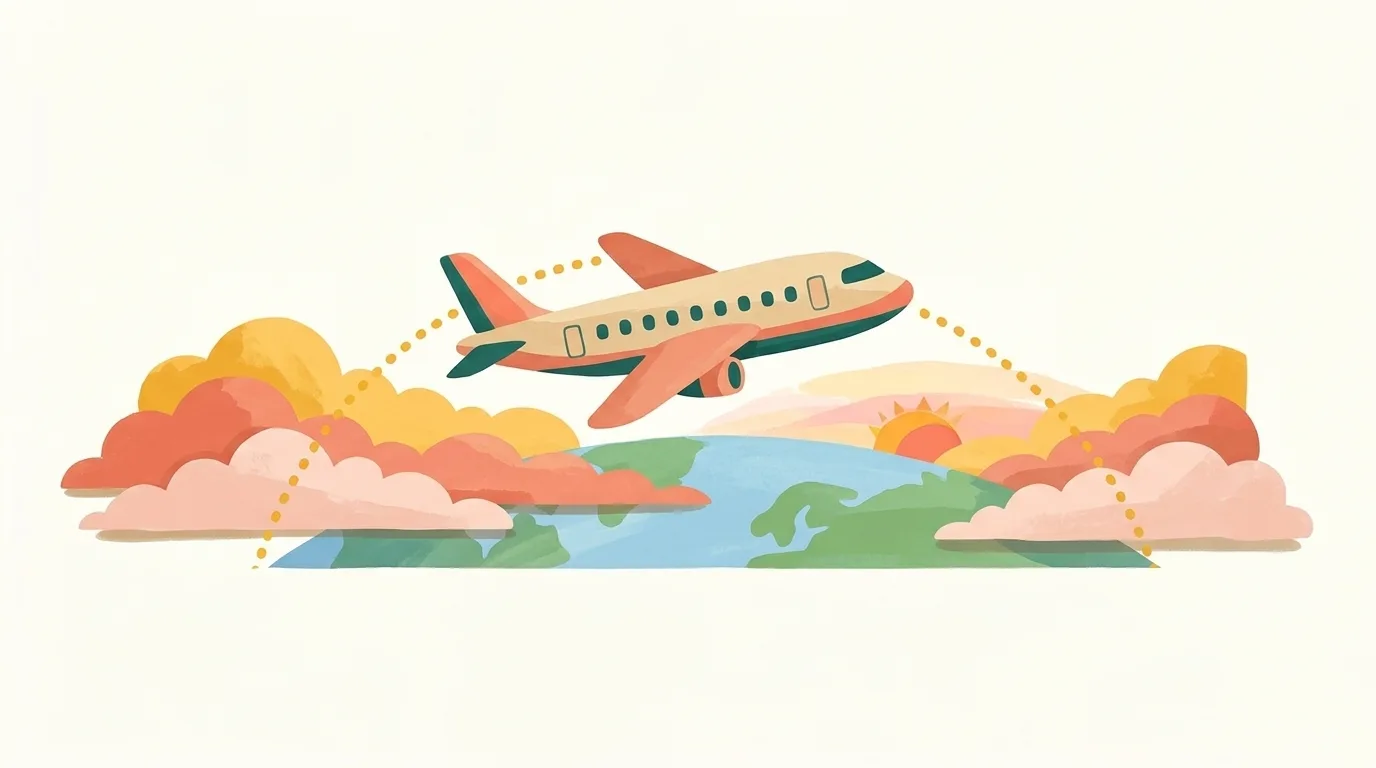
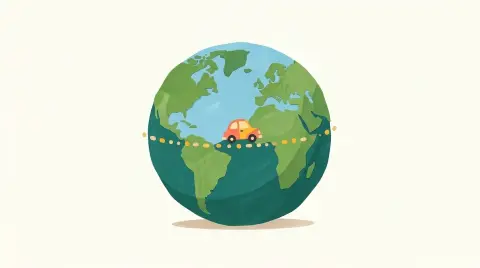
Illustration, made with AI
How does a plane get you all the way across the world?
Its jet engines blast hot gas out the back, which pushes the plane forward, high in the sky, for hours.
The engines squeeze air, burn fuel in it, and shoot it out fast.
It's like letting go of a blown-up balloon and watching it zoom!
Tell me more
Big long-distance jets cruise about 10 kilometres up in the sky. They fly at about 900 kilometres an hour, many times faster than a car on a fast road. The longest-flying airliners can go about 18,000 kilometres before they need to land. The very first jet plane flew in Germany in 1939. Since then, jet engines have grown much stronger and much more reliable. Today, a typical jetliner engine pushes more than twenty times harder than engines from the 1950s, and it almost never stops working in flight. That's why planes can safely cross whole oceans.
Words to know
- jet enginesengines that push by blasting hot gas out the back
- cruisefly steadily and fast, high up
Try it at home
Blow up a balloon and let it go without tying it. Air rushing out the back pushes the balloon forward, just like a jet engine.
 Dig deeper

 What else?

 Surprise me!