
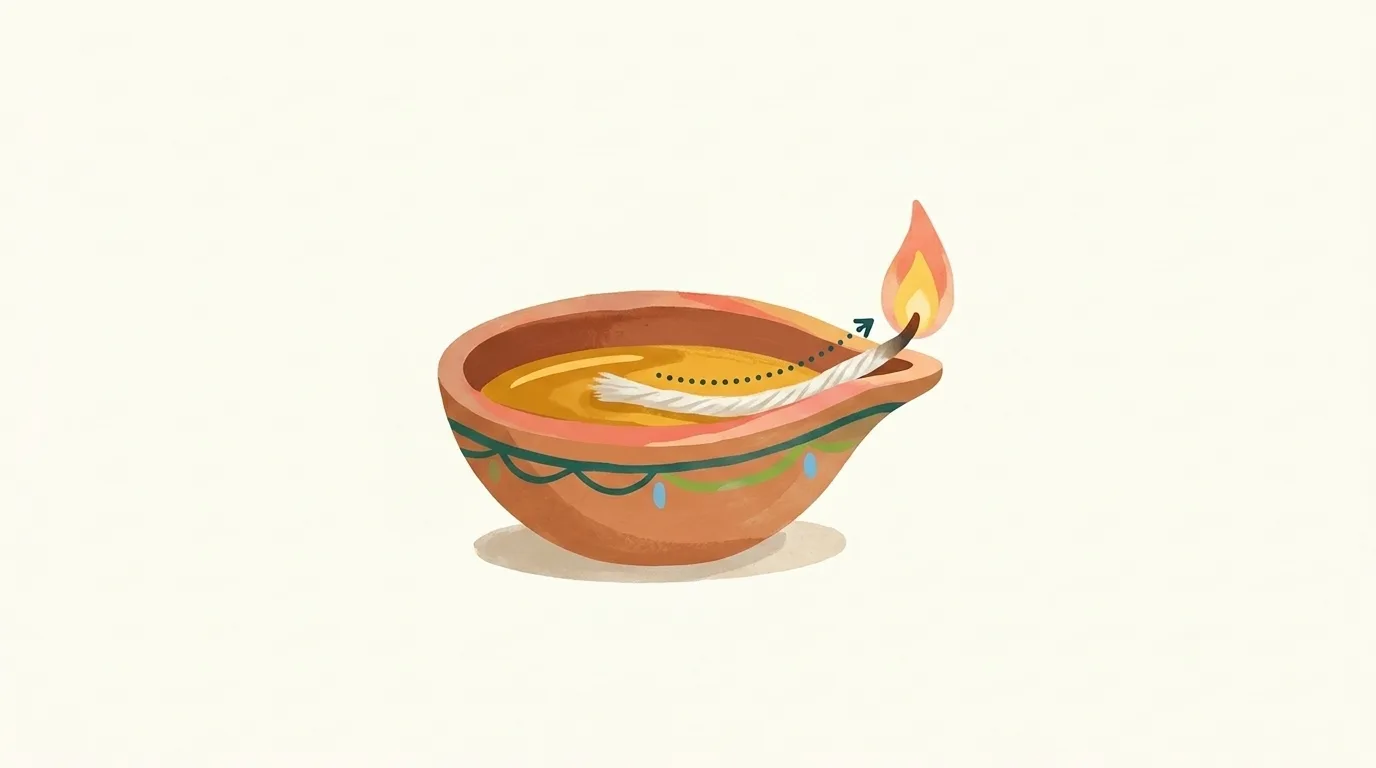
Illustration, made with AI
How does a diya make light?
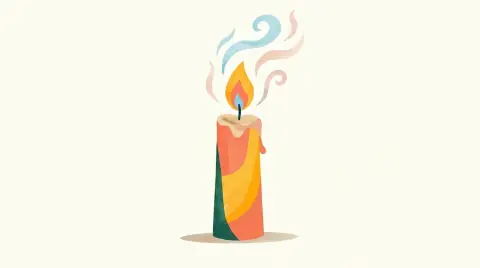
A diya is a small clay lamp filled with oil. Its cotton wick feeds the flame!
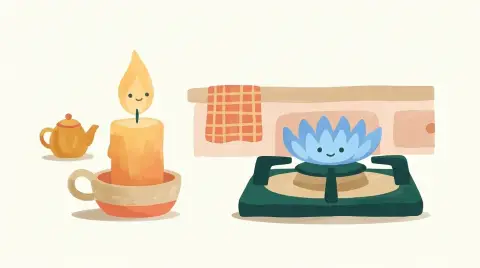
Oil creeps up the wick through tiny gaps. Heat turns it into gas, which burns and glows.
Like a paper towel drinking up a spill.
Tell me more
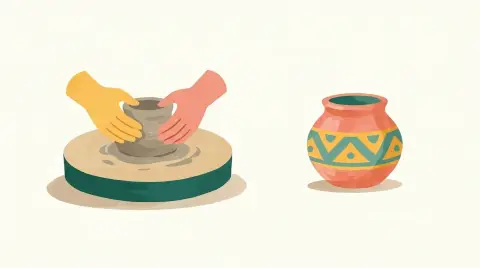
Soaking up liquid through the tiny gaps between threads is called capillary action. The wick isn't the fuel: the oil is, and the wick carries it up. Diyas can burn oil or ghee, which is a kind of butter. Most are made of clay, baked hard in a super-hot oven called a kiln. Baked clay can take lots of heat, so the little lamp stays strong beside its flame. The size of the wick sets the size of the flame: a fatter wick makes a bigger flame that uses up fuel faster. Long ago, lamps in India were bowls of stone or seashells, with a little beak at the edge.
Words to know
- diyaslittle oil lamps lit at Diwali
- capillary actionhow liquid creeps up through tiny gaps, like in a sponge
- kilna super-hot oven for baking bricks, pots and clay
Try it at home with a grown-up
With a grown-up, dip the end of a strip of paper towel into a saucer of coloured water. Watch the colour creep up the strip all by itself. A diya's cotton wick lifts oil the same way.
 Dig deeper
 What else?
 Surprise me!