
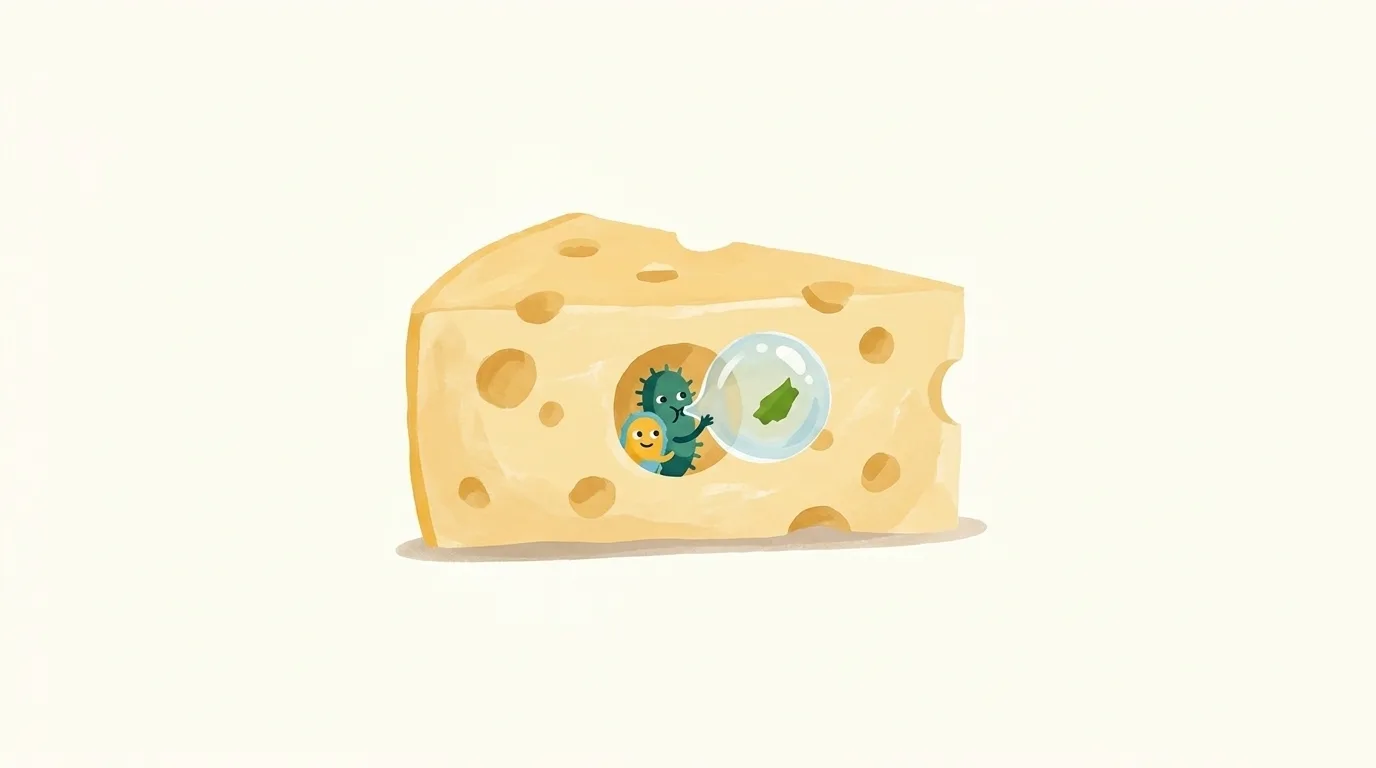
Illustration, made with AI
Why does Swiss cheese have holes?
The holes are gas bubbles, made by tiny living things called bacteria!
As the cheese ripens, bacteria feed inside it and give off carbon dioxide gas. The gas collects into bubbles that get trapped in the firm cheese.
Picture bubbles frozen inside an ice cube.
Tell me more
For a long time, cheesemakers thought bacteria alone made the holes. Then, not long ago, scientists found a missing piece. The bubbles start around specks of hay dust, far too small to see, that fall into the milk while cows are milked. Today's milking machines keep milk much cleaner, so many Swiss cheeses now have fewer and smaller holes. Cheesemakers call the holes "eyes". Long ago, holes were seen as a mistake! Now nice round eyes are a sign the cheese has ripened well. Scientists have even found ways to use sound to check how the eyes are growing.
Words to know
- bacteriatiny living things, far too small to see
- carbon dioxidean invisible gas we breathe out, also the bubbles in fizzy drinks
Try it at home
Next time you see a slice of Swiss cheese, hold it up to the light and count its eyes. Are they big or small?
 Dig deeper


 What else?

 Surprise me!